



No. 004
You could be one year old at birth — and two the very next day.
In Korea, You Were Born One Year Old

For Life
For a long time, Koreans counted age differently.
A baby was already one year old at birth. Someone born on 31 December could even turn two the very next day.
Without having celebrated a single birthday.
So why did life begin at one instead of zero?
Why did everyone grow older on the same day?
And what does this old way of counting age have to do with a glass of alcohol?
Why Were You Born One Year Old?
In the traditional Korean age system, a child was considered one year old from the day they were born. No one knows for certain why this system developed. But there is one intriguing explanation that has long been associated with it. The time spent in the womb was already considered part of a person's life. In this interpretation, life did not begin at birth. Birth was simply the moment when a life already underway entered the world. It is a beautiful idea, although there is no historical evidence proving that this was the actual origin of the age system. And Korea was not the only place to count age this way. Similar systems were historically used in other parts of East Asia, including China and Japan. What is remarkable about Korea is how long the old system remained widely used in everyday life. But there was another curious part to it. You didn't grow older on your birthday.
Everyone Grew Older Together
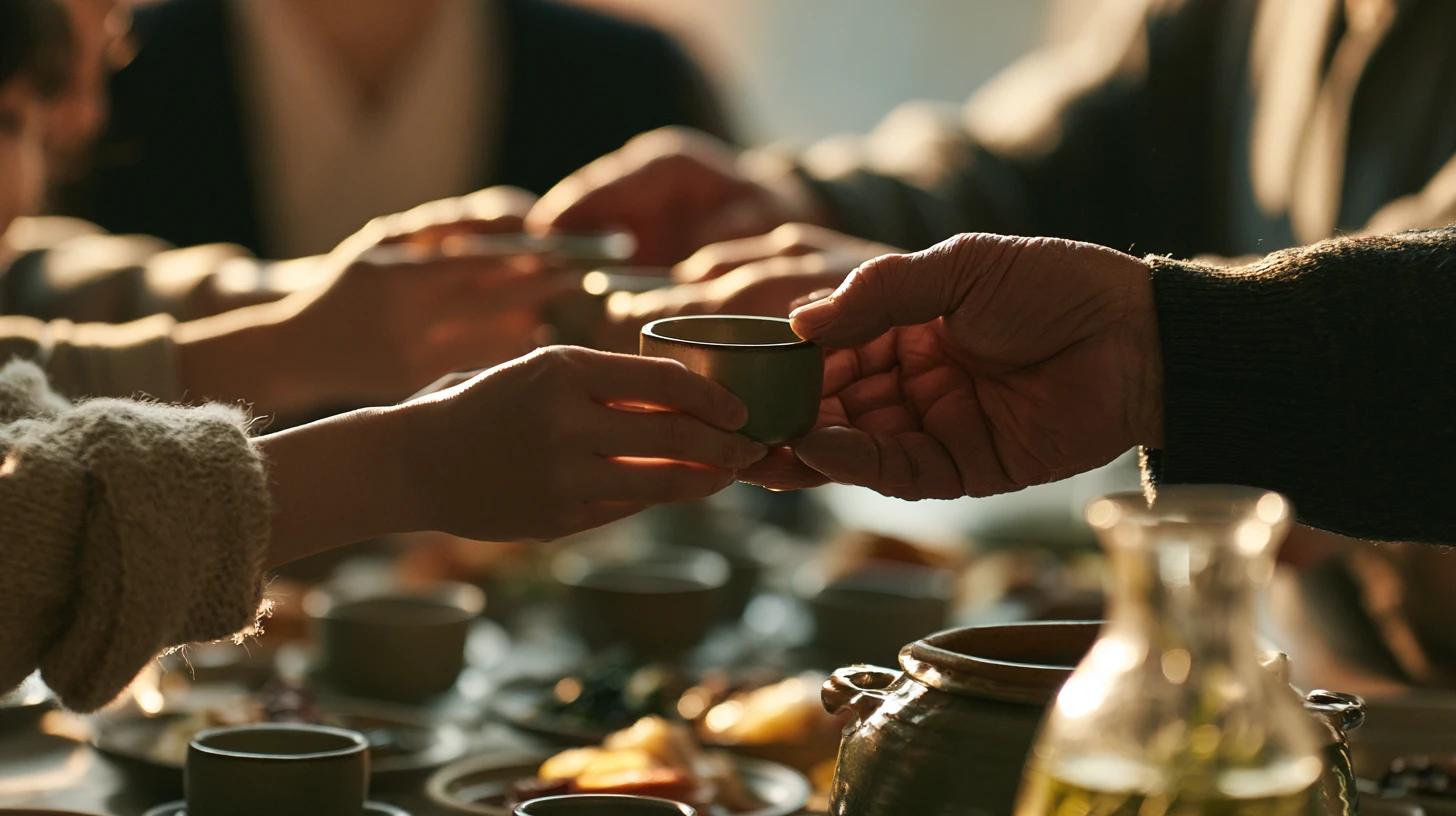
You became a year older when the New Year began.
Children, parents and grandparents all added a year to their age at the same time.
That is how a baby born on 31 December could become two years old the following day.
Rather than each person's birthday, the beginning of a new year marked the boundary between one age and the next.
And traditionally, the Korean New Year was about much more than turning a page on the calendar.
On the morning of Seollal, families gathered. They performed ancestral rites, bowed to their elders and wished one another good fortune and health for the year ahead.
As everyone entered another year of life together, there was also the hope that they would make it safely and healthily through that year.
This was expressed through many New Year customs.
One of them was seju (세주, 歲酒) — alcohol drunk at the New Year with wishes for health and longevity.
And among these New Year drinks was Dosuju (도소주, 屠蘇酒).
Who Drank First
Dosuju was a medicinal alcoholic drink traditionally consumed after the ancestral rites on the morning of Seollal.
The word doso (屠蘇) originally referred to the medicinal preparation infused into the alcohol. Its ingredients varied over time, but could include herbs and spices such as balloon flower root, cinnamon, bangpung, Sichuan pepper and baekchul.
People believed that drinking it at the New Year could help ward off illness and harmful influences and bring health and longevity for the year ahead.
The custom originated in China and later spread to Korea, Japan and other parts of East Asia. In Korea, Dosuju was particularly associated with the upper classes, while ordinary households might celebrate the New Year with other forms of seju, including clear grain alcohol such as cheongju or yakju.
In other words, this was not simply a drink for celebration.
It was shared after the family's New Year rituals, with the hope that everyone would remain healthy through another year.
But there was one curious rule.
The youngest drank first.
That may sound surprising in a culture where traditional etiquette placed such importance on serving and respecting elders first.
An old explanation gives the custom a rather poetic logic.
For the young, becoming a year older meant gaining another year of life — something to celebrate. For the old, another year could also mean having one less year ahead.
And so the cup began with the youngest.
The same New Year arrived for everyone, and everyone grew a year older together.
But that extra year did not mean quite the same thing to everyone.
One More Year, One First Drink
Today, Koreans no longer officially use this traditional system to calculate age.
Dosuju is no longer found on every Korean New Year table either. In fact, even during the Joseon period, not everyone drank Dosuju. Many households welcomed the New Year with other kinds of alcohol instead.
But put these two old traditions — Korean age and seju — together, and they reveal something about how people once understood the New Year.
It was more than the first day on a calendar.
It was the day everyone became a year older together — another year of life beginning at once.
Families gathered and wished one another health and longevity.
And sometimes, they put those wishes into the first drink of the year.
Everyone grew a year older together. And beginning with the youngest, they raised a glass to the year ahead.